Parking Suspensions & Fines During Norbury Moves: A Practical Guide for a Smoother Move
Moving in Norbury can be stressful enough without a parking ticket landing on the mat a week later. Parking Suspensions & Fines During Norbury Moves are one of those awkward little details that can turn a straightforward relocation into a messy, expensive headache. The good news? With the right planning, you can usually avoid most of the pain.
This guide explains how parking suspensions work, why they matter, what can trigger fines, and how to plan your move so the van can actually get close to the property. Whether you are moving from a flat off the High Street or a terraced home on a tighter residential road, a bit of advance thinking goes a long way. To be fair, that is often the difference between a calm move and a morning spent staring at a penalty notice.
Below, you will find practical steps, common mistakes, useful comparisons, and a realistic checklist you can use before moving day. No fluff, just the stuff people wish they had known earlier.
- Why parking suspensions and fines matter
- How it works in practice
- Key benefits of planning ahead
- Who needs this guidance
- Step-by-step guidance
- Expert tips
- Common mistakes to avoid
- Tools, resources and recommendations
- Law, compliance and best practice
- Options and comparison
- Real-world example
- Practical checklist
- Conclusion
- Frequently asked questions
Why Parking Suspensions & Fines During Norbury Moves Matters
Parking near a property in Norbury is often tighter than people expect. That is especially true if you are moving on a narrow residential street, near a station area, or somewhere with yellow lines, controlled parking bays, or limited turning space. If the removal van cannot park safely and legally, the whole move slows down. And if it parks where it should not, fines can follow.
The issue is not just the fine itself. It is the knock-on effect. A poor parking setup can add carrying time, make loading awkward, delay the crew, and increase the chance of damage if heavy furniture has to be moved farther than planned. A sofa carried from the wrong end of the street sounds small in theory. In reality, it can mean sore backs, lost time, and a lot of huffing and puffing on the pavement.
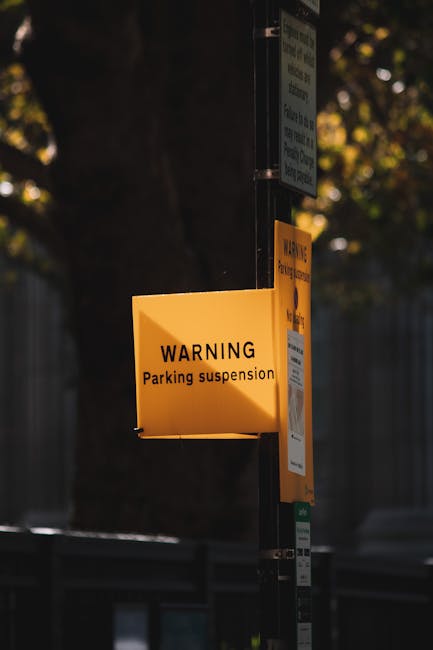
Parking suspensions are there to reserve space for a specific purpose, often because access needs to be kept clear. During a move, they can be essential when you need a bay protected for a removals van. But if a suspension is needed and not arranged properly, a civil enforcement officer may issue a penalty. That is where the trouble starts.
Norbury has a mix of property types, from flats and maisonettes to family houses and commercial premises, so the parking issue is rarely one-size-fits-all. The practical point is simple: if your move depends on street parking, it needs planning just like the packing, the lifting, and the route itself. In our experience, that small bit of admin saves more stress than people expect.
How Parking Suspensions & Fines During Norbury Moves Works
At a basic level, a parking suspension temporarily prevents normal parking in a specific bay or area. During a move, this can create a legal space for a removals vehicle, helping the team park close to the entrance and work efficiently. But the rules can vary depending on the road, the local authority area, the type of restriction, and the timing.
Here is the usual pattern in plain English:
- You identify the parking situation near both addresses, including bays, yellow lines, residents' zones, and time restrictions.
- You check whether a suspension or permit is needed for the van to stop safely and legally.
- You arrange the right permission in advance, allowing enough time for processing and signage.
- You display or follow the correct instructions on the day, so the bay is usable and the team knows where they can stop.
- You keep evidence, such as confirmation emails, permit details, or any reference number, in case questions arise later.
If the move is in an area affected by different council boundaries or restrictions, things can get more complicated. A route that looks straightforward on a map can cross into a different parking control regime. That is why local move planning matters so much, especially around SW16 where road layouts can change quickly from one street to the next.
One useful way to think about it: parking permission is part of the move logistics, not an afterthought. It belongs in the same bucket as van size, stair access, and timing. If you treat it as a last-minute errand, you are more likely to pay for it later.
Key Benefits and Practical Advantages
Putting parking arrangements in order before moving day brings several practical benefits. Some are obvious. Others only become obvious when things go wrong.
- Less delay on the day - the van can get close to the property, which keeps loading and unloading moving at a decent pace.
- Lower risk of fines - legal parking or a properly arranged suspension reduces the chance of receiving a ticket.
- Better protection for belongings - shorter carrying distances mean fewer chances for knocks, drops, and scrapes.
- Easier for the crew - movers can work more safely when they are not dragging wardrobes across half the street.
- Less neighbour friction - a planned setup is usually less disruptive than double-parking or last-minute improvisation.
There is also a quieter benefit: peace of mind. Moving day already contains enough variables. You do not want to be standing at the window, wondering whether the van is definitely allowed to be there. That nervous check every ten minutes? Not ideal.
For anyone moving a large volume of furniture, handling an awkward staircase, or coordinating a same-day handover, good parking arrangements can make the entire experience feel more controlled. Not perfect. Just controlled enough to breathe properly.
Who This Is For and When It Makes Sense
This topic matters to more people than you might think. It is not only for people moving from a house with a driveway-less street. It affects renters, homeowners, landlords, small businesses, and anyone using a removals van where roadside access is limited.
You should pay close attention to parking suspensions and fines if you are:
- moving from or to a flat with no private parking;
- relocating on a street with yellow lines or bay restrictions;
- moving at a busy time when on-street parking is already scarce;
- using a larger van or lorry that needs more stopping space;
- moving bulky furniture, fragile items, or multiple rooms in one trip;
- coordinating a business move where timing and access matter;
- trying to keep costs under control and avoid surprises.
It also makes sense if you are using a local team that knows the area well, because local knowledge can be surprisingly valuable. A good crew will often spot access issues early and ask the awkward questions before moving day. That is a good sign, not a nuisance.
If your move is modest, you may not need a formal parking suspension. If you have clear access or private parking, the issue may be minimal. But if you are even slightly unsure, it is worth checking rather than assuming everything will sort itself out. Usually it does not, if we are honest.
Step-by-Step Guidance
Here is a practical way to handle parking for a Norbury move without overcomplicating it.
1. Check both addresses early
Look at the old and new property separately. The parking setup at one address may be straightforward while the other is a headache. Streets near stations, busier junctions, or narrow residential roads often need more attention.
2. Note the restrictions
Look for resident bays, pay-and-display areas, single yellow lines, double yellow lines, loading restrictions, and any signs about time limits. If the signage is unclear, do not guess. A few minutes of checking is better than a fine and a bad mood.
3. Measure the practical access
Think beyond the legal side. Can the van stop without blocking a junction? Is there room for doors to open? Can the crew carry items in a straight line, or will they have to weave around railings, parked cars, and bins?
4. Decide whether a suspension or permit is needed
Some situations need formal permission, while others may simply need careful timing. If there is any doubt, ask early. The answer can change depending on whether the road is controlled by one authority or another, and whether the vehicle will be blocking a marked bay.
5. Book the move with the parking plan in mind
Do not leave parking as a separate problem for later. Coordinate the arrival time, van size, and route together. If you are also booking packing help or special-item handling, factor those into the space and timing required.
6. Keep your proof handy
Save confirmation details in your phone and in email. On the day, it is useful to have the reference number, bay location, and any instructions close at hand. If a question comes up, you can answer it quickly.
7. Recheck on the day
Street conditions can change overnight. A skip, building works, another vehicle, or temporary signage can alter the plan. Arrive a little early if you can. Five minutes can save a lot of unnecessary panic.
A small but important point: if you are moving into a tight street, it often helps to have one person act as the parking spotter. That extra pair of eyes can make a big difference when the van is reversing in and the morning air is still cold and a bit grey.
Expert Tips for Better Results
A few practical habits make parking issues much easier to manage. These are the kind of details that seasoned movers notice straight away.
- Plan for the largest vehicle, not the smallest one. A small van may fit where a larger removals vehicle will not.
- Check whether the road has schools, markets, or commuter pressure. Timing can change everything.
- Do not rely on "someone should be fine with it". Informal assumptions are where fines love to hide.
- Keep a photo record of signs and the parked position if the street is complicated. It is not glamorous, but it can help.
- Build in a buffer. Traffic, loading, and lift access rarely run perfectly to plan.
If you are moving from a block of flats, speak to the building management or landlord early. Some buildings have access rules that affect where a van can wait, and sometimes there are loading bays with limited windows. That tiny detail can be the difference between a smooth lift and a queue of frustrated residents trying to squeeze past.
Another sensible habit: line up your parking plan with your packing plan. If the van has to wait, items should be ready to go. Standing around while the crew looks for a bay is avoidable stress, and nobody needs that before breakfast.
Common Mistakes to Avoid
Most problems in this area come from a handful of predictable mistakes. The frustrating part is that they are usually avoidable.
- Leaving parking arrangements too late and discovering the suspension timeline is not as quick as you hoped.
- Assuming a van can stop anywhere briefly. In many places, "just a minute" is still a problem.
- Ignoring different rules on each side of the road. London streets can be oddly inconsistent like that.
- Forgetting about height, width, or turning space. A legal parking spot may still be unusable in practice.
- Not telling neighbours or building management, which can create avoidable friction.
- Mixing up loading space with parking space. They are not always the same thing.
- Failing to keep paperwork or messages in case a parking issue is questioned later.
One of the biggest mistakes is treating a fine as just bad luck. Often it is not. It is the result of a missing step that could have been handled earlier. A little unglamorous admin now is better than a complaint later. That is just the truth of it.
Tools, Resources and Recommendations
You do not need a huge toolkit to manage parking for a move, but a few things help a lot. These are practical, everyday tools rather than fancy extras.
- Phone camera for photographing signage, bay markings, and vehicle position.
- Notes app for keeping reference numbers, contact names, and arrival instructions together.
- Printed moving plan if you prefer something physical in case your battery runs down at the wrong moment.
- Measuring tape if you want to check whether furniture and van access will really work.
- Boxes and labels so loading is efficient once the van is in place.
Helpful website pages from the same site can also support the wider move planning process. If you need a fuller service overview, the removal services page gives a broader picture of what can be handled. For a bigger relocation, you may also want to look at home moves or office relocation services depending on the type of move.
If your move involves delicate planning or you want more clarity on prices, the pricing and quotes page can help you understand how estimates are usually discussed. And if you are trying to work out what kind of vehicle suits your street, the moving van page may be useful as a general reference.
For local moving context, the site's related articles are particularly handy. For example, Lambeth council moving restrictions for Norbury SW16 and Croydon council permits and removals rules for Norbury homes cover the kind of local detail people often overlook until the last minute.
Law, Compliance, Standards, or Best Practice
Parking suspensions and penalties sit within local parking control arrangements, so the exact rules depend on the street, the authority, and the specific restriction in place. Because of that, it is best to treat council guidance and signage as the deciding factors, not guesswork, not hearsay, and definitely not the old "it'll be all right for a few minutes" approach.
From a best-practice point of view, the safe approach is simple:
- check the signage and restrictions carefully;
- arrange any required suspension or permission in advance;
- make sure the vehicle is parked only where allowed;
- keep confirmation details accessible on the day;
- respect loading, access, and safety requirements.
If a move involves shared access, a block entrance, or a busy road, good practice also means thinking about pedestrians and neighbours. Keeping footways clear where possible, avoiding blind corners, and planning a sensible unloading sequence all help reduce friction. It sounds obvious. Yet these are the bits that get missed when everyone is rushing.
It is also sensible to consider wider moving best practice, especially if you are coordinating packing, lifting, or a same-day turnaround. Internal guidance on health and safety policy and insurance and safety can be helpful if you want to understand the standards behind careful removals work.
Options, Methods, or Comparison Table
There are a few different ways to handle parking during a move. The right option depends on the road, the property, and how much time you have before moving day.
| Option | Best for | Pros | Limitations |
|---|---|---|---|
| Street parking without a suspension | Low-restriction roads with enough space | Simple, quick, often no extra admin | Riskier on busy or controlled streets |
| Temporary parking suspension | Narrow roads or marked bays where access must be reserved | More reliable space, smoother loading | Needs planning, timing, and correct setup |
| Use of a private drive or forecourt | Homes or premises with private access | Lowest risk of enforcement issues | Not available for many London properties |
| Timed arrival with short loading window | Carefully managed moves on less busy streets | Flexible and may avoid extra steps | Still vulnerable to delays and street changes |
In practice, the best option is often the one that balances legality, access, and convenience. A private drive sounds ideal, of course, but not everyone has one. If you are relying on street parking, a suspension or permit-led approach is usually safer than improvising on the day.
Case Study or Real-World Example
Here is a realistic example from a typical Norbury move. A couple were moving from a first-floor flat on a residential street with limited roadside space. The road had a mix of resident bays and busy daytime parking, and the removal van would have struggled to stop close to the entrance.
Instead of waiting until the morning of the move, they checked the access situation a week ahead. They identified the likely loading spot, confirmed the street restrictions, and arranged the parking setup early enough for the crew to arrive with a clear plan. They also packed the heavier boxes first and kept the hallway clear, which sounds minor, but it mattered.
On the day, the van parked where it needed to, the carrying distance stayed short, and the move ran with fewer pauses. There were still the normal little hiccups - a neighbour reversed out at the wrong time, and someone could not find a set of keys for two nervous minutes - but the parking side held up. No fine. No last-minute scramble. Just a slightly tired team and the satisfying sound of the final door shutting.
That is what good preparation looks like. Not perfection. Just fewer surprises.
Practical Checklist
Use this checklist before moving day. Print it, screenshot it, scribble on it, whatever works.
- Confirm the move date and estimated arrival time.
- Check parking restrictions at both properties.
- Identify whether a suspension, permit, or loading arrangement is needed.
- Measure likely access for the van and furniture.
- Check for narrow roads, low branches, gates, or awkward turns.
- Keep confirmation details and contact numbers handy.
- Tell neighbours or building management if needed.
- Arrange boxes so the first load is ready to go.
- Take photos of signage and the final parked position if useful.
- Leave a little time buffer for traffic and small delays.
Quick expert summary: if parking is even slightly uncertain, plan it early, confirm it in writing where possible, and make sure the van has a legal, workable place to stop. That one habit alone prevents a surprising amount of stress.
Conclusion
Parking Suspensions & Fines During Norbury Moves are not the most exciting part of relocating, but they are among the most practical. Get the parking right, and the rest of the move tends to feel calmer, quicker, and a lot less chaotic. Get it wrong, and everything gets harder than it needs to be.
The best approach is simple: check the restrictions, plan early, keep proof handy, and think about the move as a whole rather than as a series of last-minute tasks. That is especially true in Norbury, where street layouts and parking pressure can change from one road to the next. A few careful steps now can save you time, money, and a fair bit of irritation later.
Get a free quote today and see how much you can save.
And if you are in the middle of planning, take a breath. A well-organised move is still possible, even with tight parking. You just need the right details in place, one by one.
Frequently Asked Questions
Do I always need a parking suspension for a Norbury move?
No, not always. If you have private parking, an unrestricted loading area, or a street where stopping is allowed and practical, you may not need one. But if the van needs to occupy a marked bay or a restricted space, a suspension may be the safer option.
Can I risk parking briefly and just loading quickly?
That is risky. "Just for a few minutes" can still lead to a fine if the restriction is enforced. Even if no ticket appears immediately, the move can be disrupted if the vehicle has to be moved unexpectedly.
How far in advance should I check parking for my move?
As early as you can. A few days is better than a few hours. If a formal suspension or special arrangement is needed, give yourself enough time to sort it before moving day arrives in a rush.
What if the parking space is taken on the day?
That is where a backup plan matters. Keep alternative stopping options in mind, and make sure the moving team knows the likely plan B. A good crew will usually adapt, but it is better not to improvise under pressure.
Are fines more likely on busy roads in Norbury?
Usually, yes. Busy roads tend to have more parking pressure, more restrictions, and less room for error. That does not mean a quiet street is risk-free, but busier roads often need more careful planning.
What details should I keep with me on moving day?
Keep the move reference, any parking confirmation, contact details, and the exact address in your phone and, ideally, on paper too. When the day gets busy, simple and accessible beats clever and buried in your inbox.
Does a larger van make parking more difficult?
Often it does. Bigger vehicles need more space, more turning room, and more thought about access. If you are unsure, the size of the van should be matched to the street conditions rather than chosen on guesswork alone.
Can neighbours object to my removals van parking outside?
They may be unhappy, but if the vehicle is parked legally and sensibly, that is usually what matters. Good communication helps, though. A quick note or a polite heads-up can prevent unnecessary friction.
What is the biggest mistake people make with parking during a move?
Leaving it too late. That is the simple answer. A surprising number of parking problems come from assuming there will be a space, or that permission can be arranged instantly. Sometimes it can, but often it cannot.
How do parking suspensions help with bulky or awkward items?
They reduce the carrying distance and let the crew position the van where it is actually useful. That matters more than people realise when you are moving wardrobes, sofas, beds, or anything awkward through narrow hallways.
Where can I get more help with planning a Norbury move?
It helps to look at related moving guidance as well, especially if your move has several moving parts. Articles like Norbury removals quotes, hidden costs that surprise Norbury movers, and best times to book a man with van for Norbury station moves can give you a more rounded picture.